Leonid Dymenko

Web designer · Kyiv

Websitesthat calculate.

I'm Leonid Dymenko. I design websites whose first screen is not a picture but the product's real calculation: light inside a stone, air in a tunnel, a harvest in a field.

See the flagshipsDiscuss a project

sites in the library
707
flagships
40
niches
34
from day one
uk + en
×1

Hover — there is a person behind the sites. Click opens the site under the lens.Tap — the lens shows the sites and the person behind them.

  1. 01

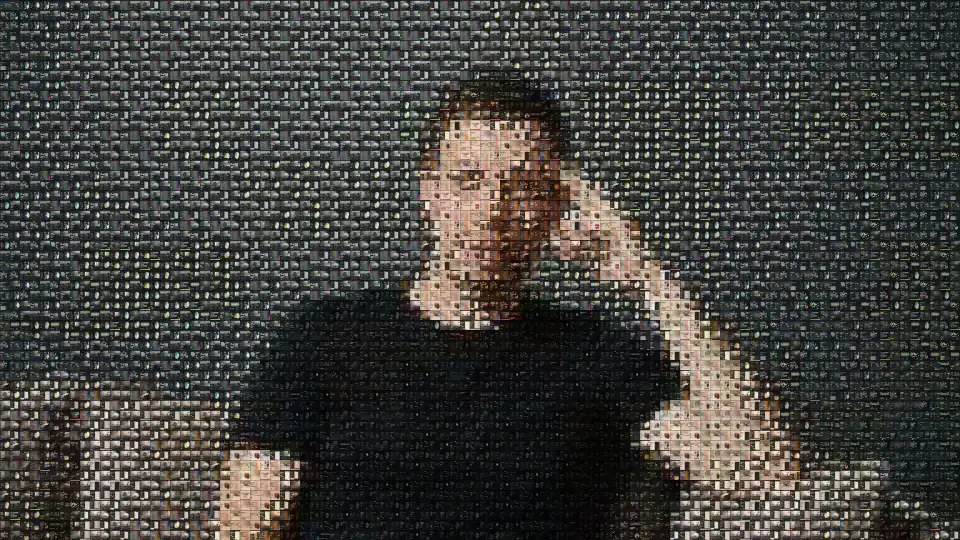
    A portrait made of sites

    Every cell is a live site from my library. The cell colour comes from the video frame; the site is the closest colour match in CIELAB.

  2. 02

    Closer, you see the work

    Neighbouring cells never repeat, and the frame does not flicker: a cell keeps its site while it is still almost as close in colour.

  3. 03

    Each one has an address

    All 707 are online at their own addresses. Below are the strongest and what is engineered inside them.

The video and the mosaic use an AI avatar made from my photos (Veo).

Who I am

I am a web designer and an engineer in one person. MSc in electrical engineering (NUFT, 2010); since 2014 I have automated processes and built data systems, and today I build websites the way tools are built: from intent to a verified calculation.

My point is simple: people are convinced not by animation but by their own numbers. So on my sites visitors change the parameters and watch the scene, the figures and the price respond.

Claude Code is my main instrument: I set the task, hold the invariants and verify the result, the model writes the code. Every site passes a gate of checks before you ever see it.

first automation
2014
sites built in 2026
707
automated checks per site
23
Flagships

Sites at the edge of technical complexity: each has its own real-time simulation or renderer and a real calculation for its niche, wired to the scene both ways.

Brands are fictional and prices are demo: these are ready-made niche sites. Lighthouse figures are mobile runs against the live address.

Bespoke engagement rings

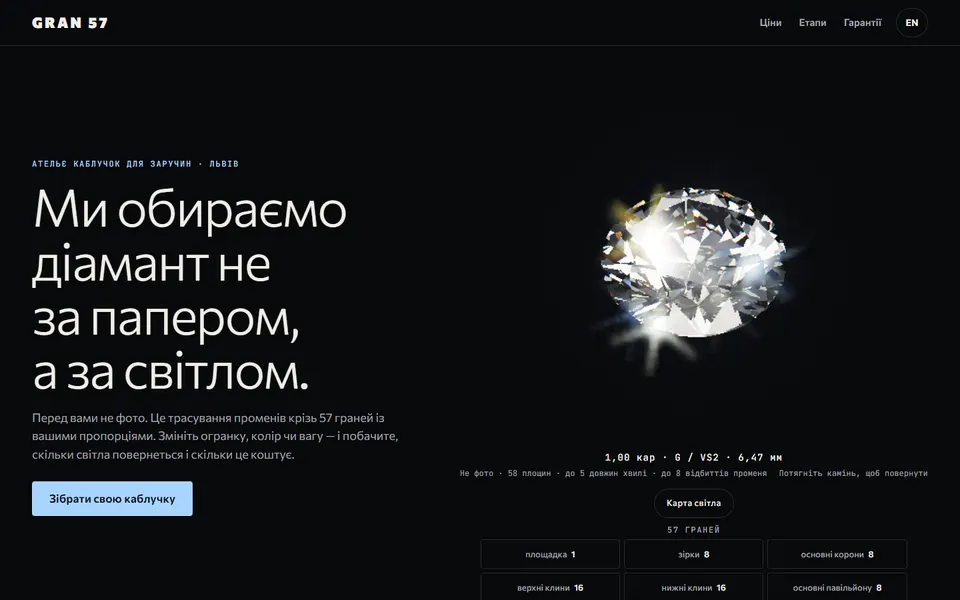
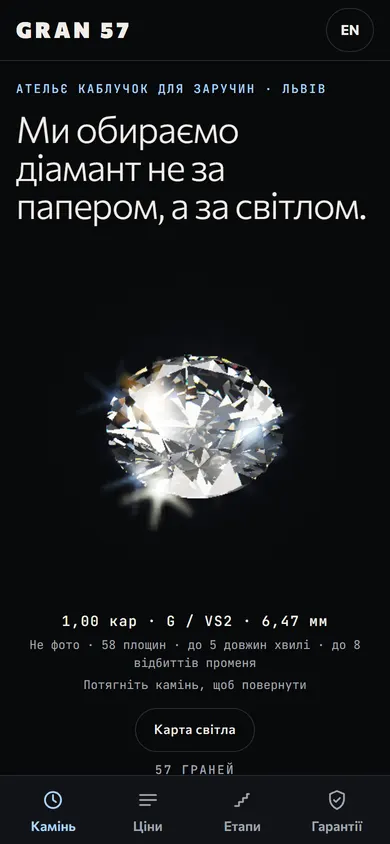
GRAN 57

The diamond is ray-traced in a shader: 58 facets, Snell and Fresnel, Sellmeier dispersion, up to 8 bounces at 3–5 wavelengths. The same tracer on the CPU measures light return and draws the fallback frame.

96 Lighthouse2.48 s LCP

Animation & 3D studio

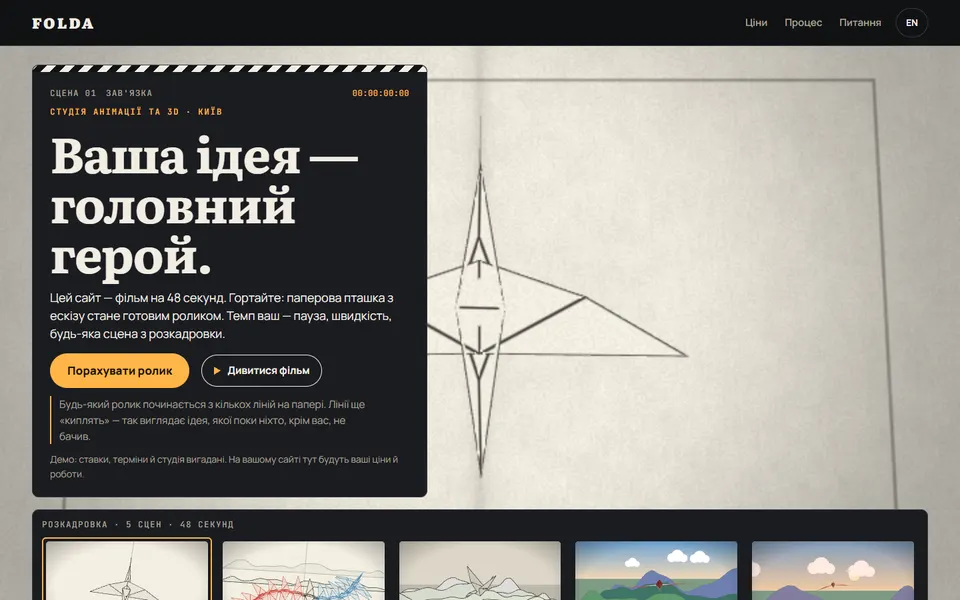
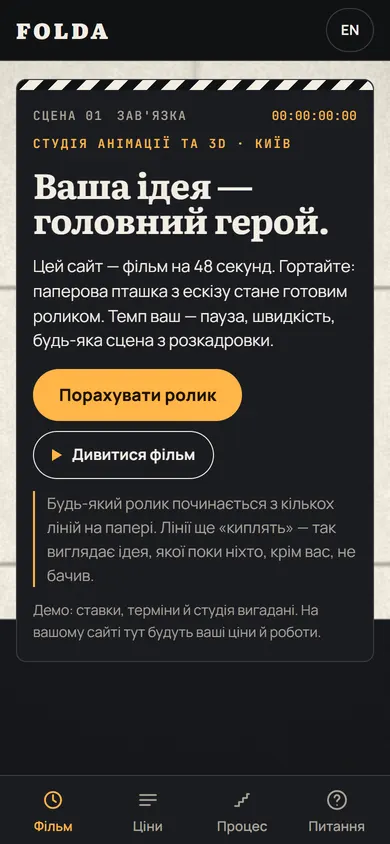
FOLDA

A 48-second cartoon of a site: scrolling drives film time, and the budget edits the film itself — key poses turn into animatic ghosts, style switches the renderer, quality adds or removes Monte Carlo noise.

Identity studio

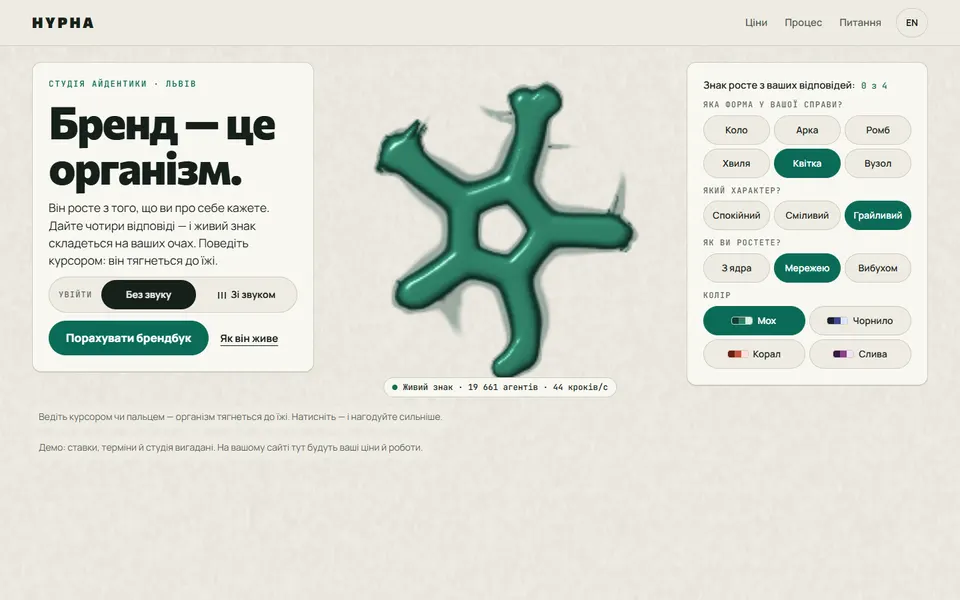
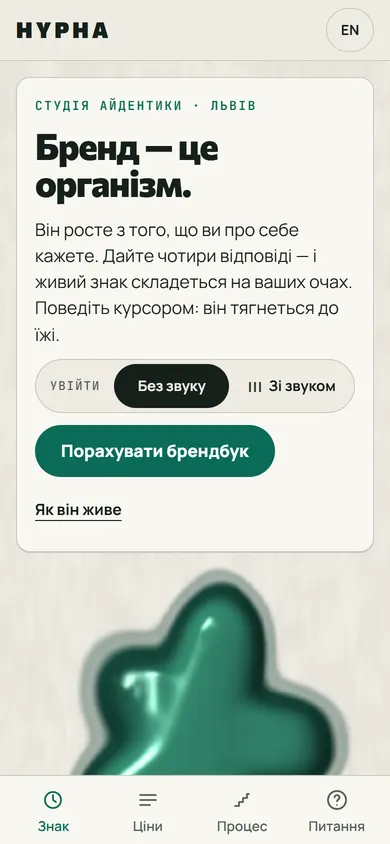
HYPHA

A living identity mark: a Physarum colony on the GPU grows from your answers and reaches for the cursor, is vectorised to SVG every two seconds, and its complexity flows back into the brand-book estimate.

Satellite monitoring platform

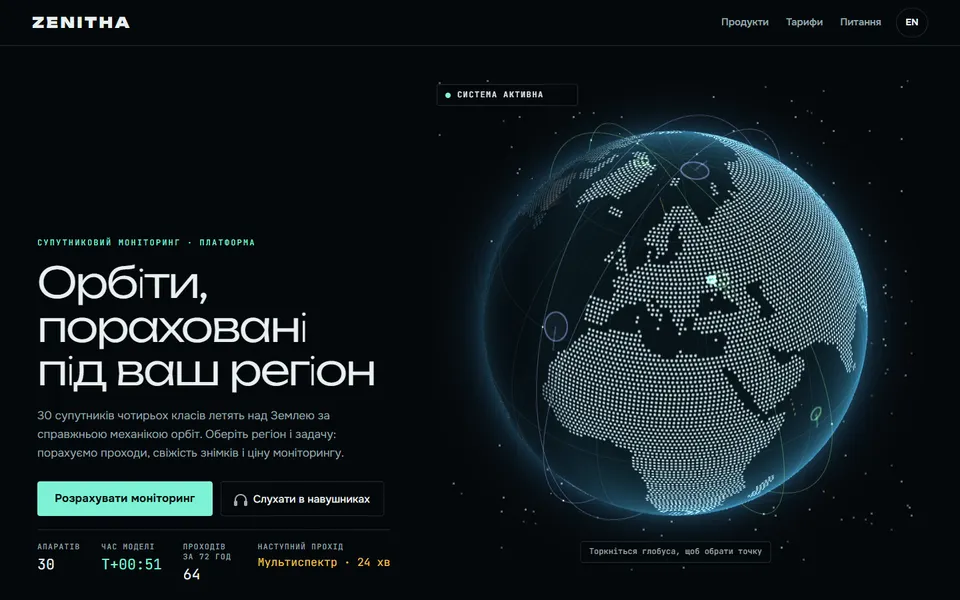
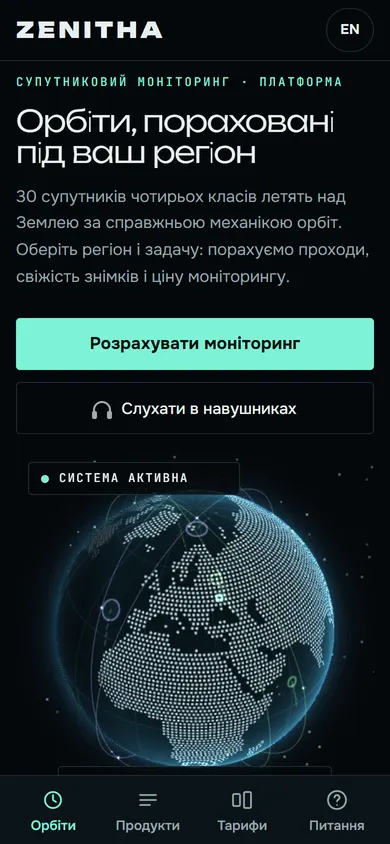
ZENITHA

A live 30-satellite constellation: Keplerian orbits with J2 precession, passes over your region and image freshness come from orbital mechanics; the globe and day/night by the real Sun are plain WebGL2.

Corn breeding and seed

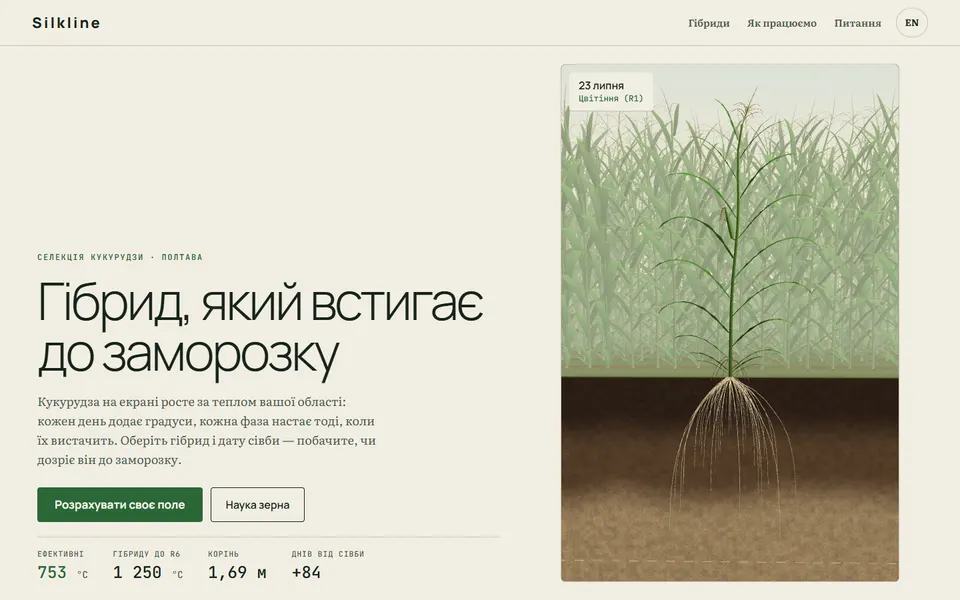
Silkline

Corn grows on screen by the growing degree days of your region: stages by Iowa State thresholds, frost risk, field rows instanced at the real seeding step, the kernel ray-marched as a distance field.

Brand & digital agency

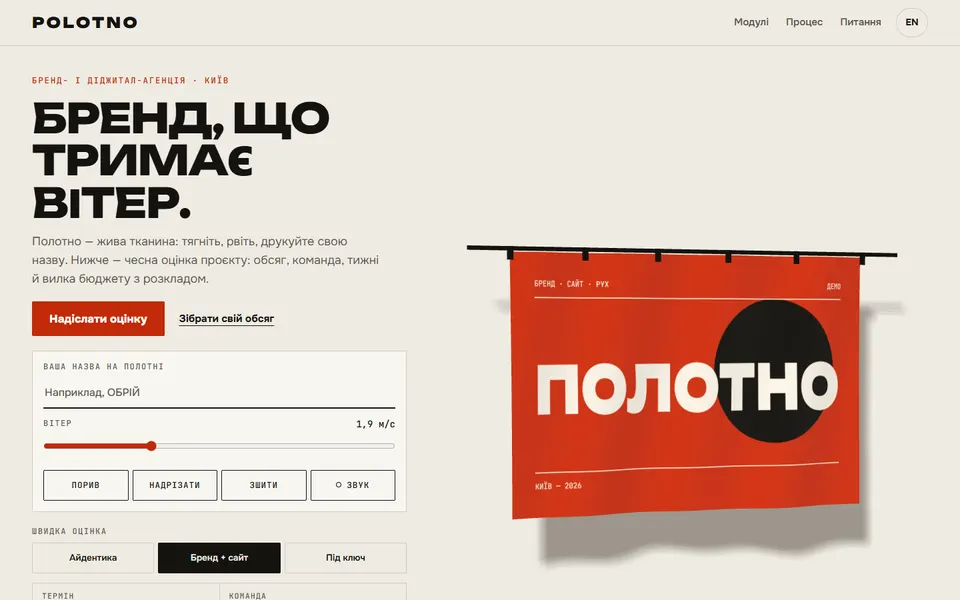
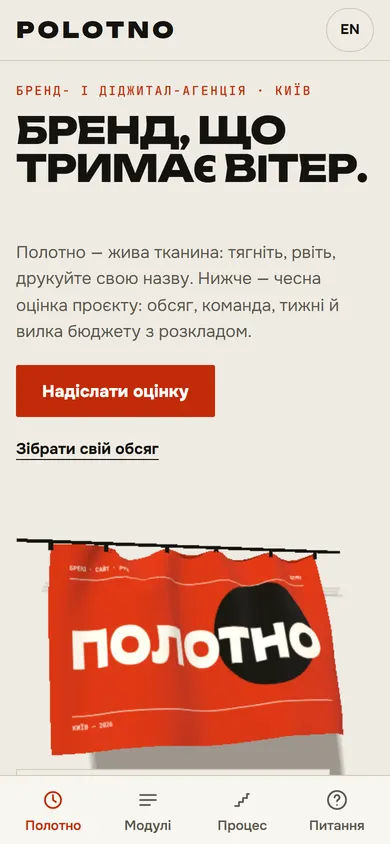
POLOTNO

A living canvas of type: a custom XPBD cloth solver with 2,379 particles and 13,776 constraints and per-triangle aerodynamics; grab, cut and tear it. The project estimate is PERT with a P10–P90 range.

80 Lighthouse2.36 s LCP

Programming school

TRASA

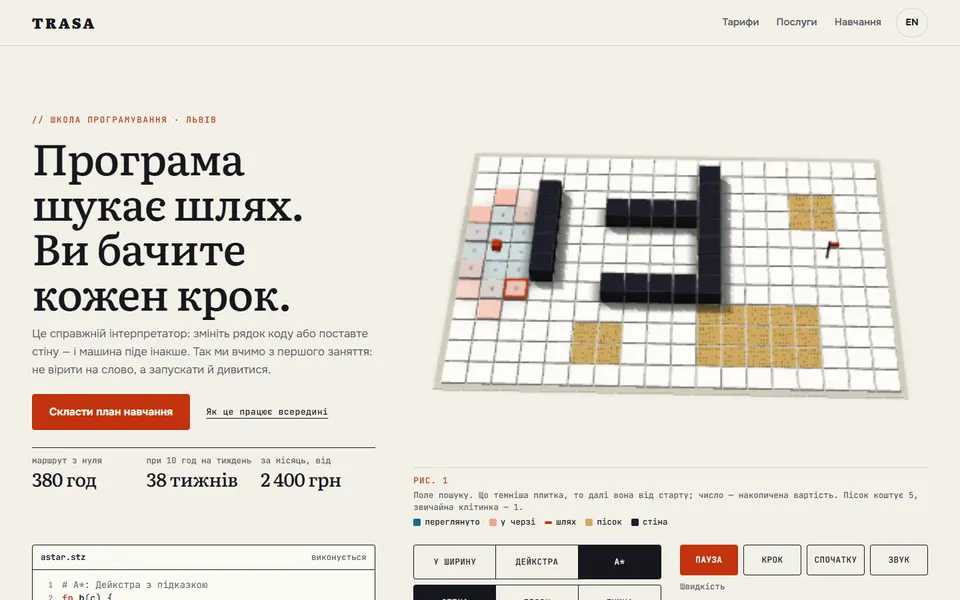
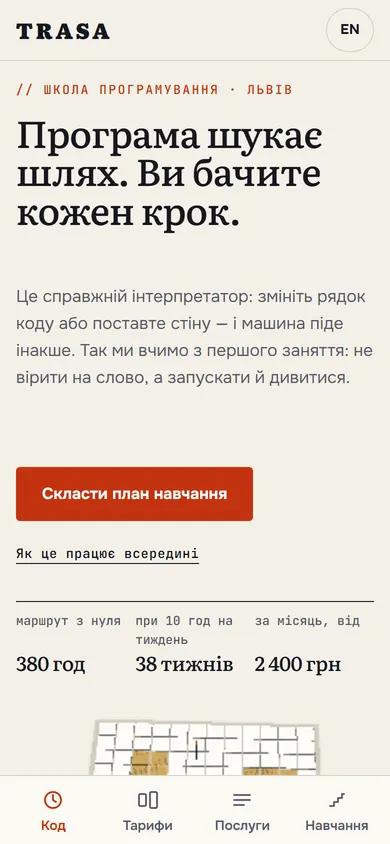
A teaching language with its own in-browser interpreter: lexer, parser, bytecode compiler, stack machine and a debugger that rewinds time. The program finds paths (BFS, Dijkstra, A*) on a field the visitor draws.

96 Lighthouse2.26 s LCP

Aero kits and track tuning

STRUM

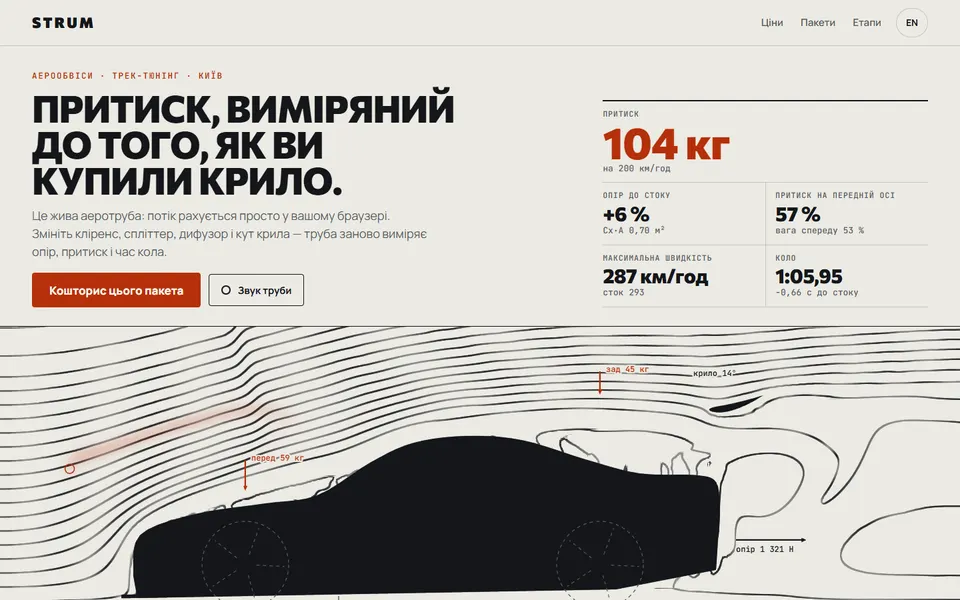
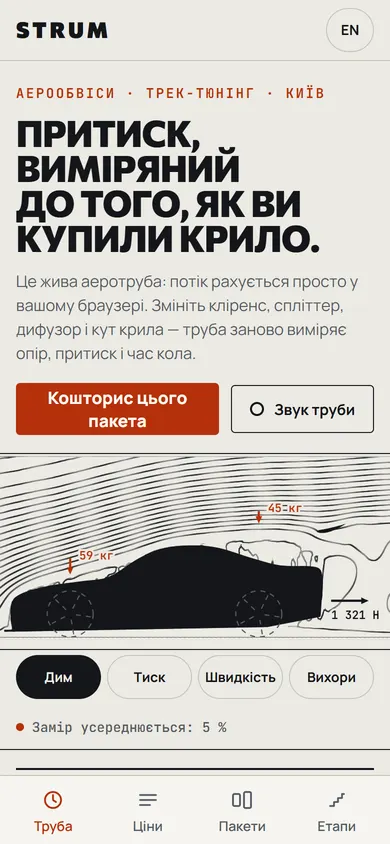
A wind tunnel on the GPU: lattice Boltzmann D2Q9 with Smagorinsky in shaders, body force by momentum exchange, a second tunnel for comparison and the same solver on the CPU for the build-time frame.

97 Lighthouse2.11 s LCP

Watch workshop

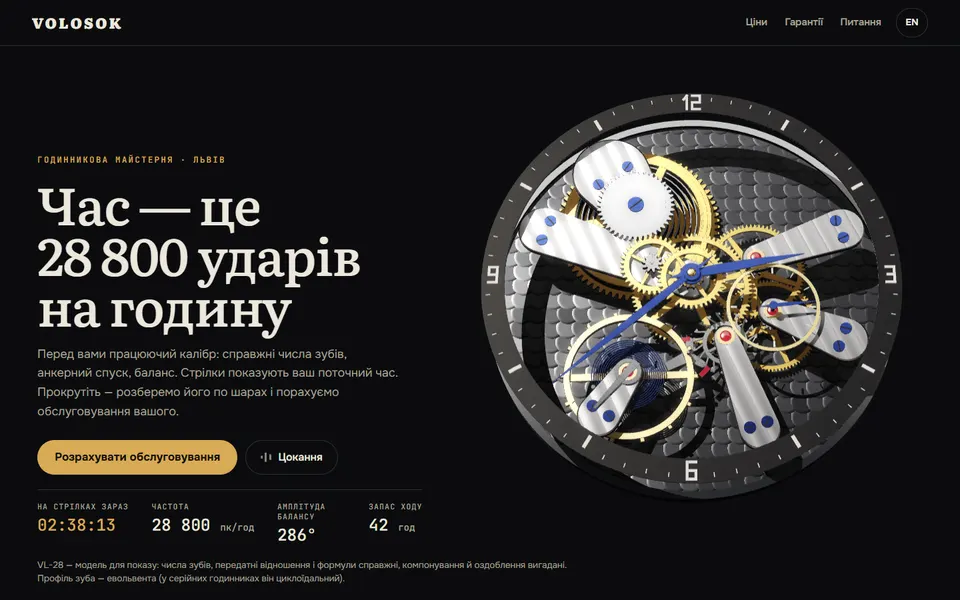
VOLOSOK

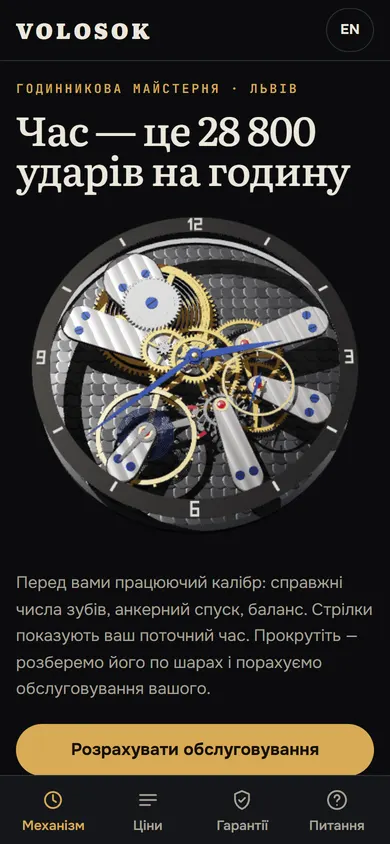
A working watch calibre: a gear train with real tooth counts, a 28,800 vph lever escapement, involute wheels from formulas (64k vertices in a Worker); the hands show your local time.

96 Lighthouse2.27 s LCP

Staking and validators

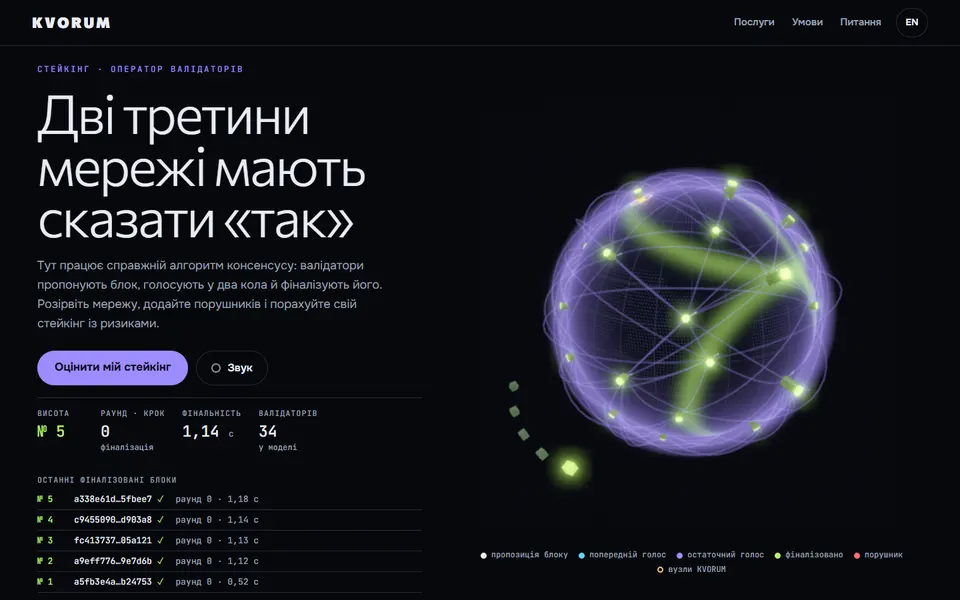
KVORUM

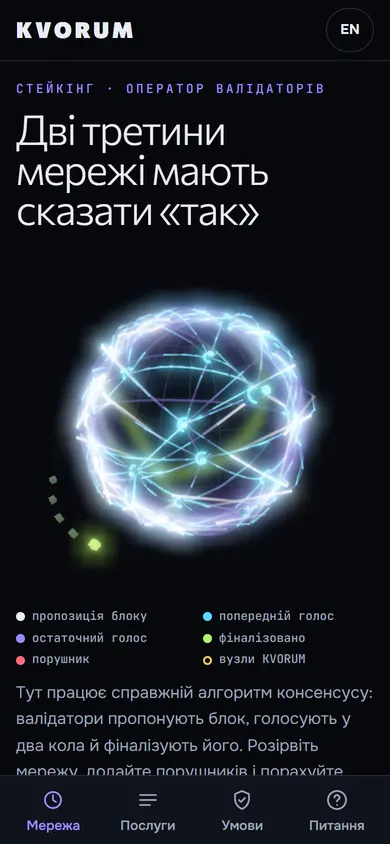
Live BFT consensus: a discrete-event Tendermint model with 21–55 validators in a Worker, network partitions, Byzantine nodes, double-signing slashes and a real fork; SHA-256 blocks and a Merkle tree via WebCrypto.

97 Lighthouse2.11 s LCP

CNC machining on demand

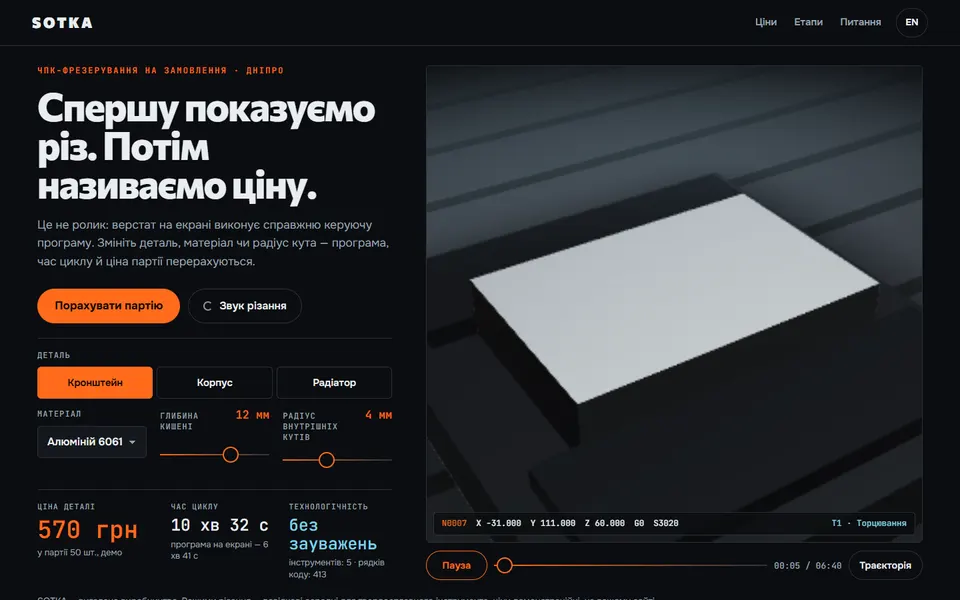
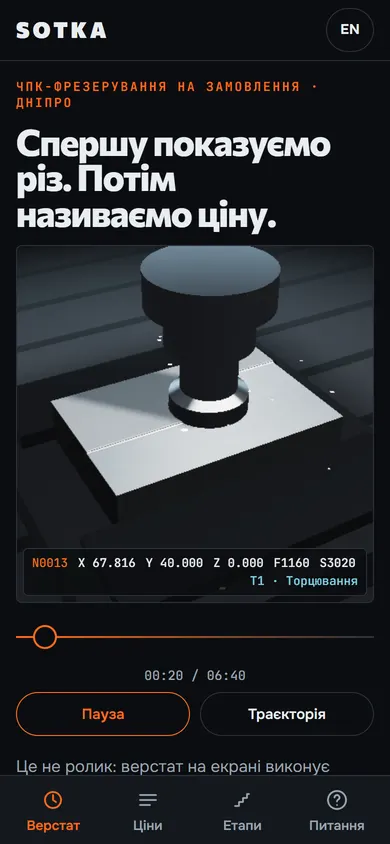
SOTKA

A CNC mill in the browser: a built-in process planner writes G-code for the part, a custom interpreter runs it with line-numbered alarms, material removal is a GPU height map, the batch price comes from cycle time.

97 Lighthouse2.12 s LCP

Mountain lodge (flagship)

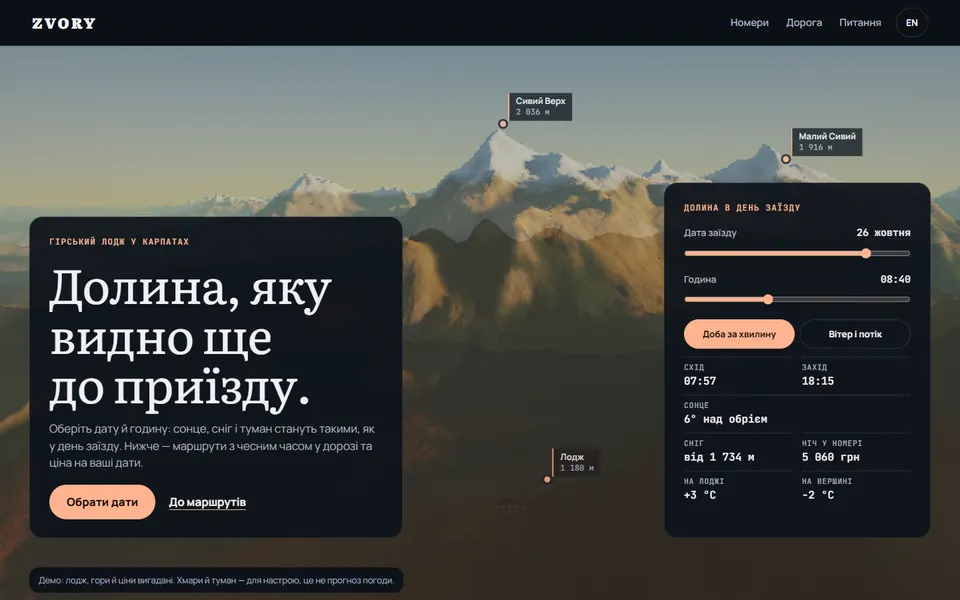
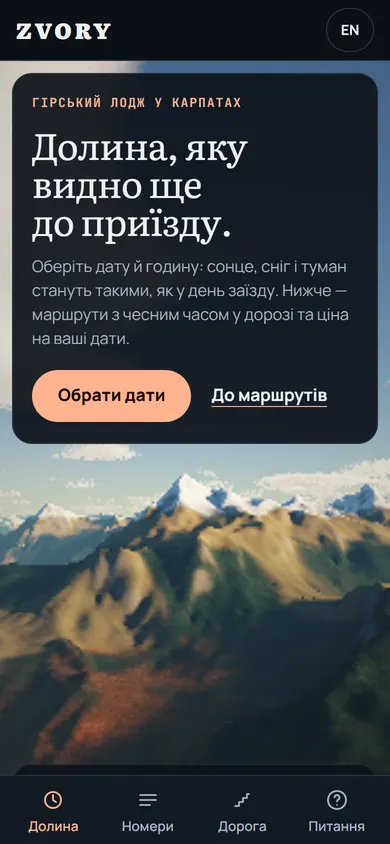
ZVORY

A procedural alpine valley: hydraulic erosion in a Worker, height-field ray marching, Rayleigh and Mie scattering, clouds and fog; the Sun by NOAA for your check-in date, trails by Tobler-function path finding.

97 Lighthouse2.12 s LCP

Catalogue of all sites ↗

Engineered work

Sites for real products: the main technique shows the product's own data — cutting sheets, people flow, light on a wall, the cardboard of a model.

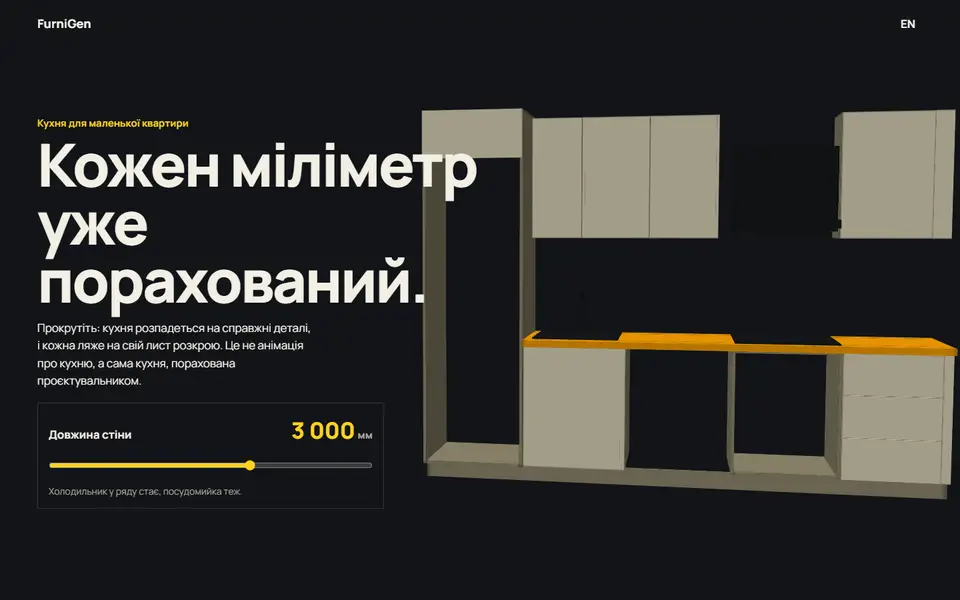
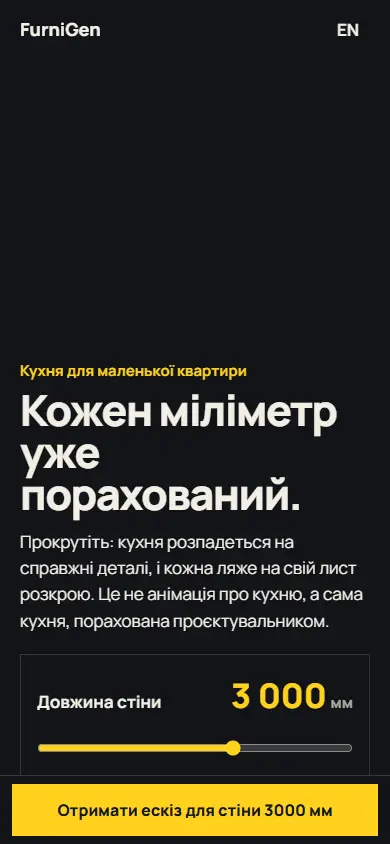
lab-compact.furnigen.app

FurniGen · compact

A kitchen laid out onto real cutting sheets: GPU instancing, every part posed in a vertex shader, the SVG drawing as a function of the calculation — sizes and drilling from the real planner.

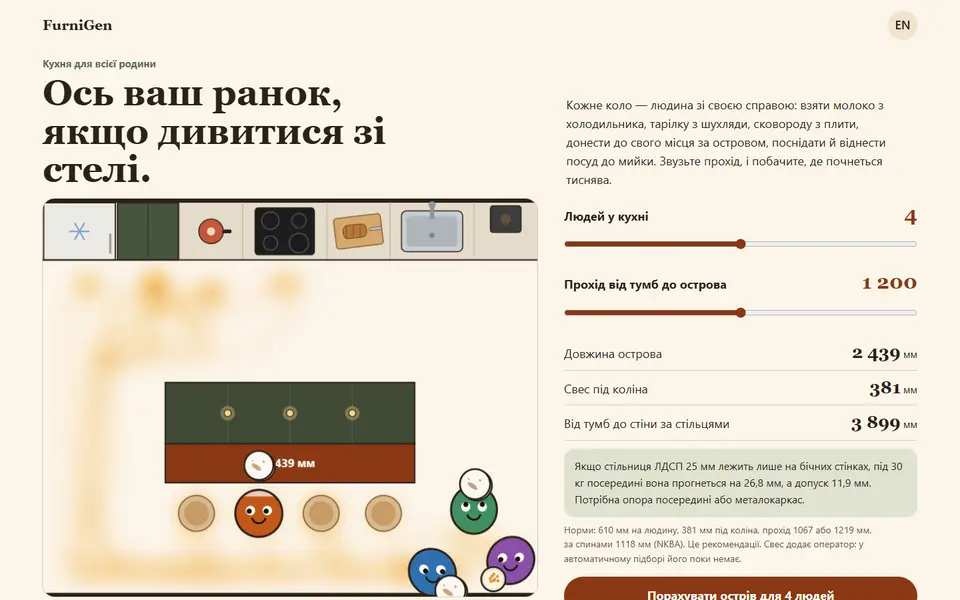
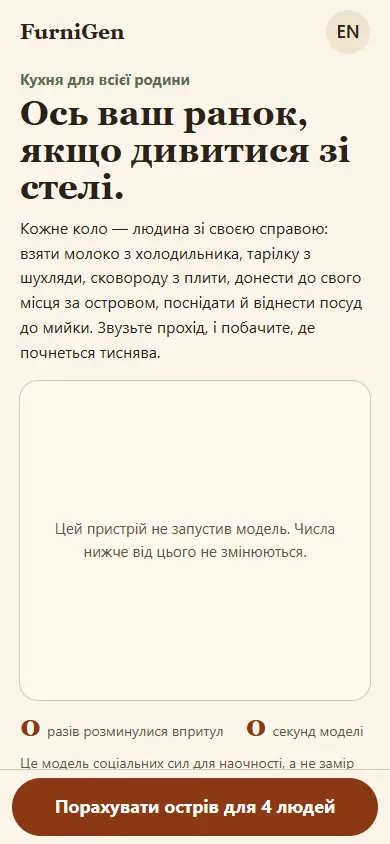
lab-family.furnigen.app

FurniGen · family

Where people crowd in a kitchen: a behaviour model in a Worker, a GPU heat map and live characters on Canvas 2D — for the real aisle between modules.

lab-performer.furnigen.app

FurniGen · performer

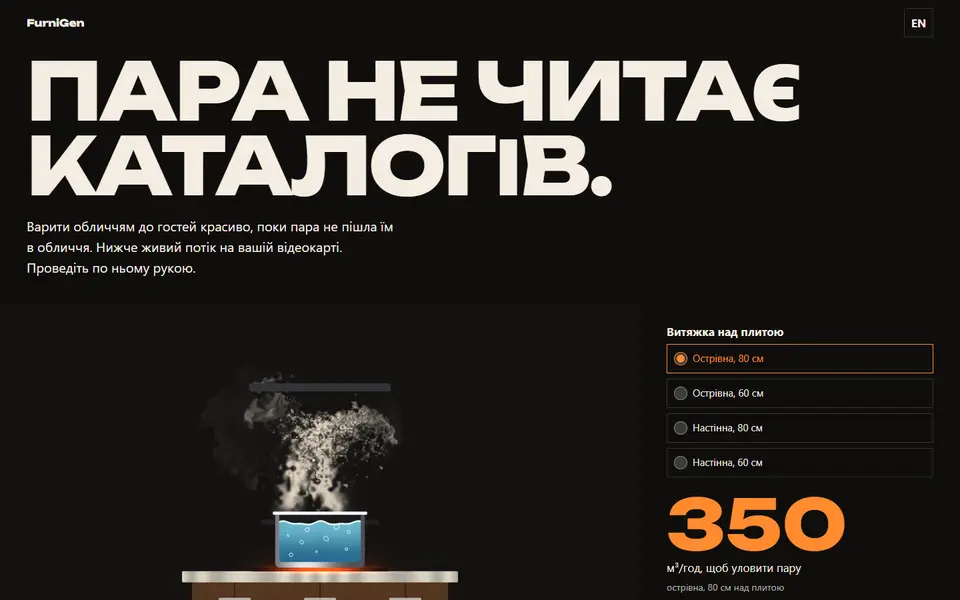
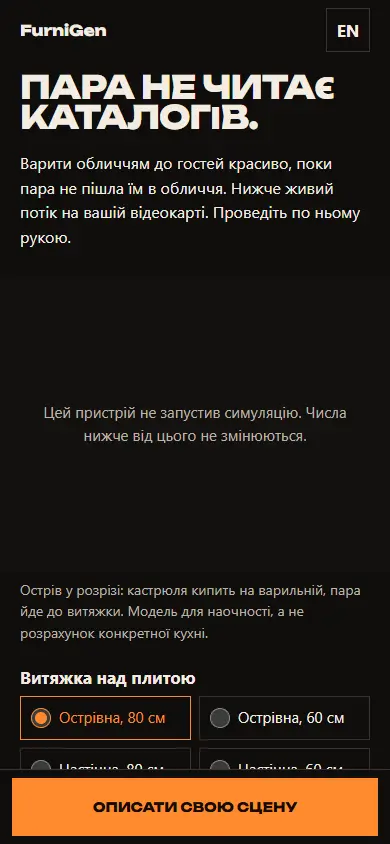
Steam over the island and hood airflow: Navier–Stokes on WebGL2, the flow can be pushed by hand, sound by Web Audio.

lab-purist.furnigen.app

FurniGen · purist

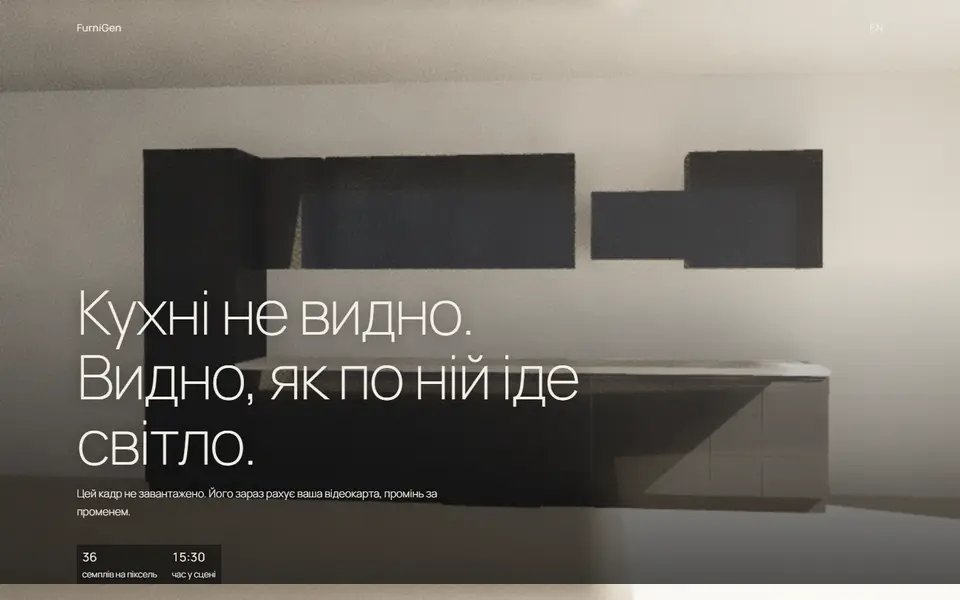
Daylight on a real wall: path tracing in a shader, a clean frame while moving and accumulation at rest — the 3 mm gap between fronts is visible.
lab-estate.furnigen.app

FurniGen · estate

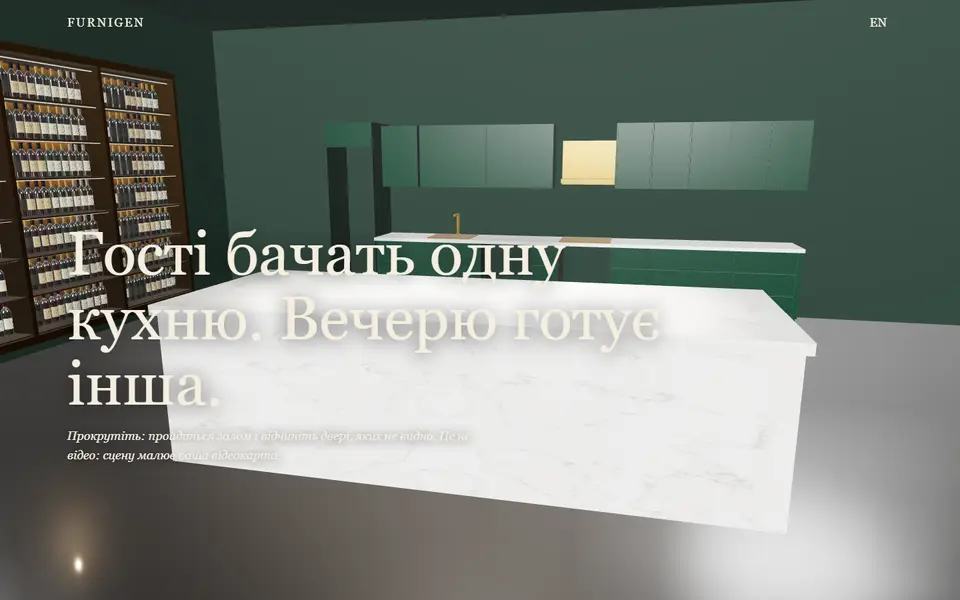
A walk through two kitchens: PBR, procedural stone in a shader, a stencil portal between scenes, a camera driven by the scroll timeline. A concept.

galeon.craftgen.app

GALLEON 1:36

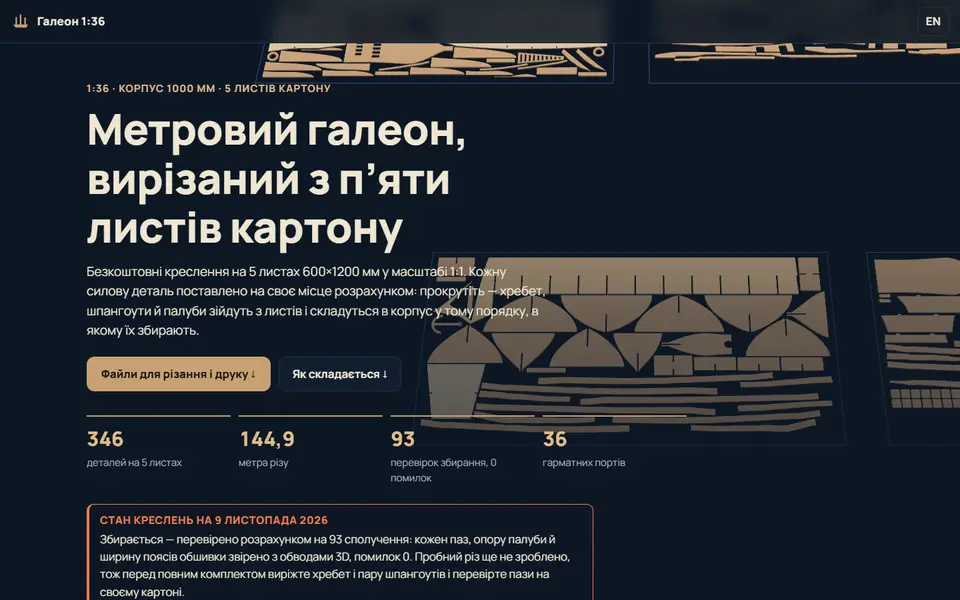
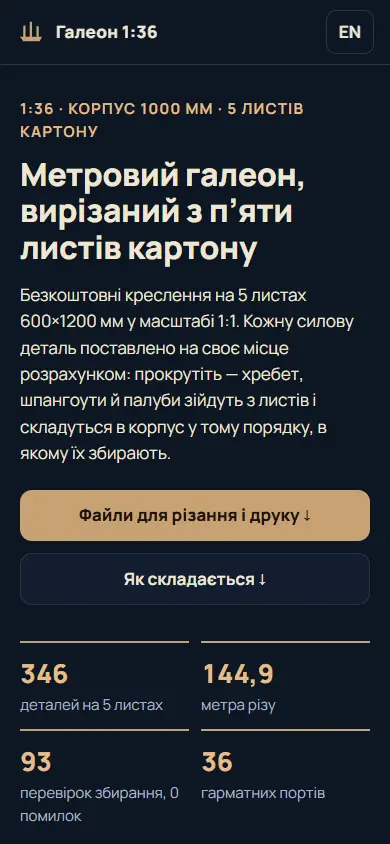
A metre-long historical model from five cardboard sheets: parametric 60×120 cm nesting with an automatic overlap check, a museum-grade 3D model and an X-ray of the hull frame. Lighthouse mobile 100.

packgen.craftgen.app

packgen

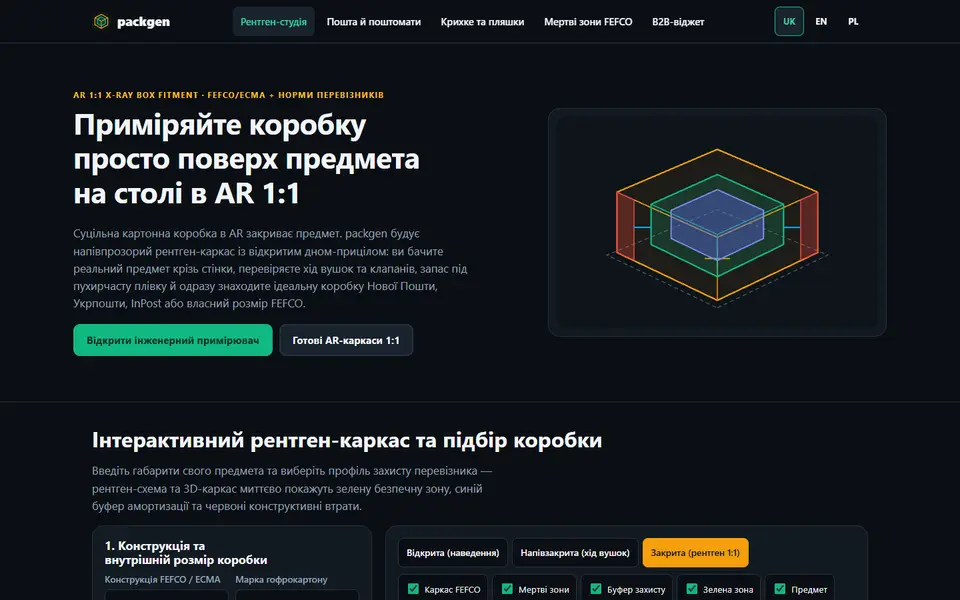
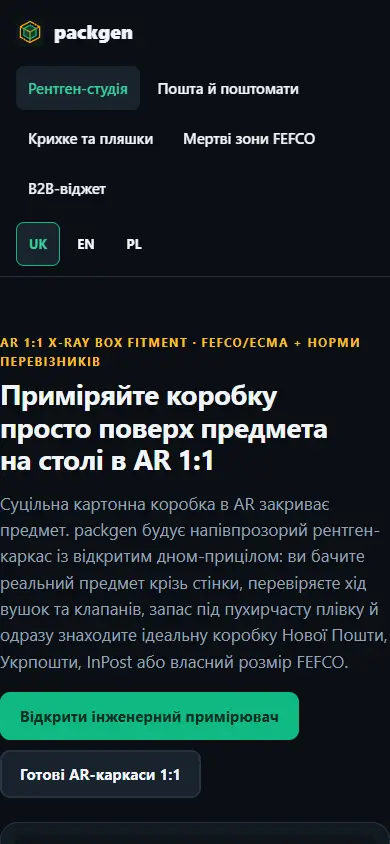
X-ray box fitting over the real item in 1:1 AR: a translucent wireframe with a reticle grid, dead zones of 25 FEFCO/ECMA styles and a match across 39 carrier boxes.

boxes.craftgen.app

showgen

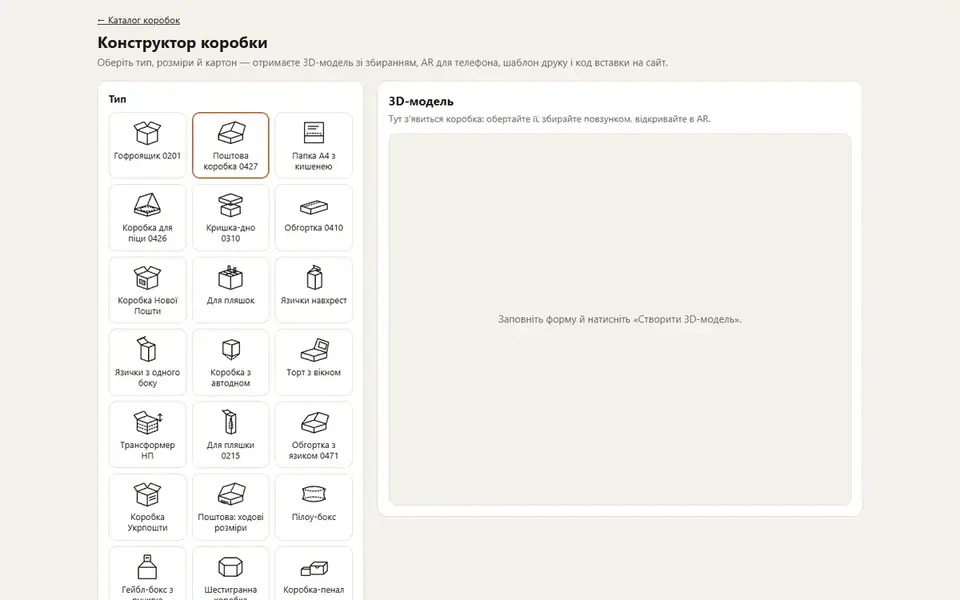
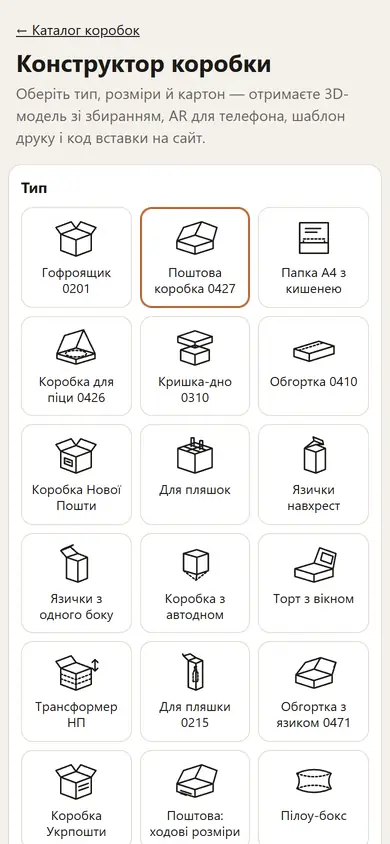
A FEFCO box builder in 3D: the box folds on a slider, a print die-line and AR, embeds into any site with one script.

How I work

  1. 01

    Intent before code

    Five to eight lines: who looks and on what device, the one action of the page, which fear of the buyer we remove.

  2. 02

    The product's calculation

    I look for what the product already knows: sizes, norms, prices. If something is missing, the site says so instead of inventing it.

  3. 03

    A scene from the numbers

    The technique follows the argument: remove the real data and the scene must lose its meaning. Otherwise it is decoration.

  4. 04

    A gate of checks

    Layouts from 320 px to 1920, Safari and iPad, no GPU, reduced motion, languages, speed from the live address.

Let's talk about your site

Tell me what the product is and who buys it — I will answer with the scene and the calculation I would build for it.

Write an email